Showing posts with label san francisco 49ers. Show all posts

Saturday, February 10, 2024

Could Your 401(k)’s Fate Rest on the Winner of Super Bowl 58?

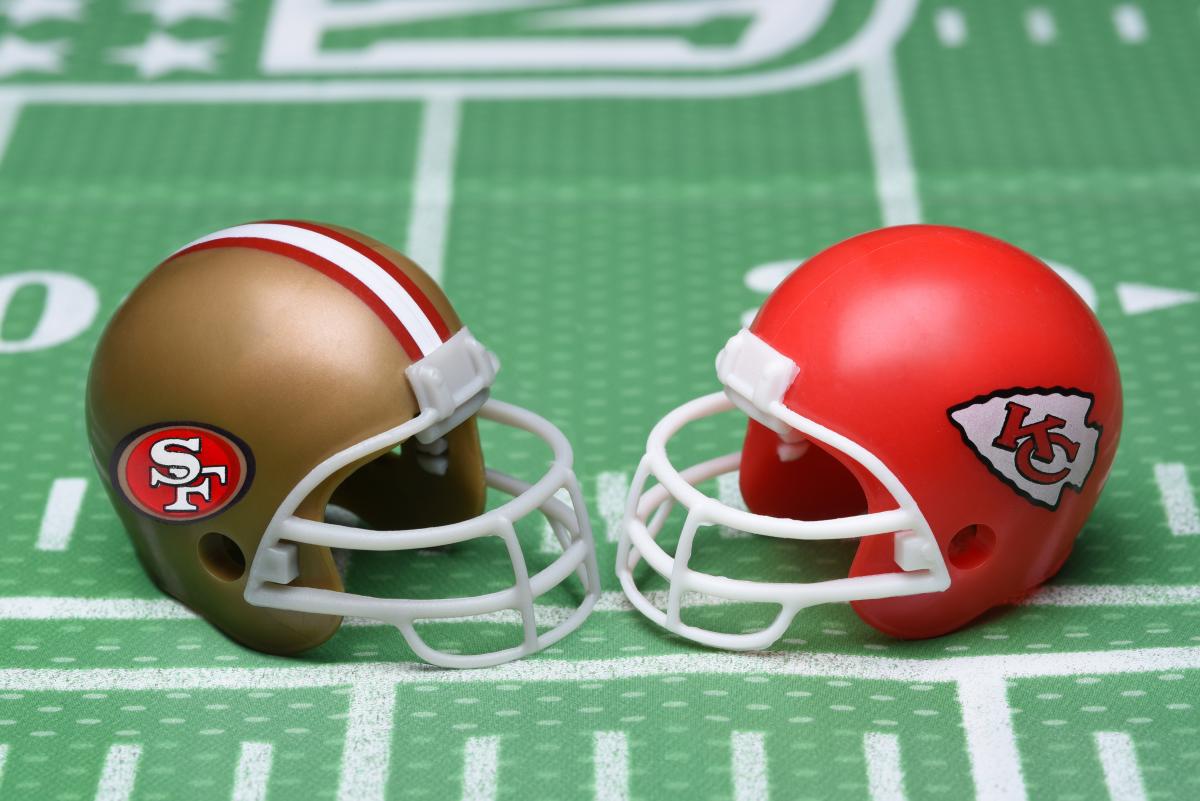
Will your 401(k) be chopped by the Chiefs—or find gold with the 49ers?

That’s what adherents of the so-called Super Bowl Indicator[1] would likely conclude, after all. It’s a “theory” that when a team from the old National Football League wins the Super Bowl, the S&P 500 will rise, and when a team from the old American Football League prevails, stock prices will fall.

It’s a “theory” that has been found to be correct nearly 80% of the time—for 41 of the 57 Super Bowls, in fact. Not that it hasn’t been tackled short of the goal line. 

Portfolio Prognostications

One needs to look back no further than last year’s victory by the (original AFL) Kansas City Chiefs that, according to the Indicator, should have predicted a portfolio predicament for the S&P 500—but wound up with a 25% gain for the year. Or the year before that when the victory by the Los Angeles Rams “should” have been a portent of good times, only to see the S&P 500 slump more than 19% for its biggest loss since 2008. 

And while the previous year’s victory by the NFC’s Tampa Bay Buccaneers bolstered the premise behind the “theory,” the year before that the win by these same Kansas City Chiefs—who have become something of a regular in the big contest—over the then-NFC champion San Francisco 49ers undermined its track record (or did your 401(k) miss that 18.4% rise in the S&P 500?). Or how about the year before THAT when the AFC’s New England Patriots (who once upon a time were the AFL’s Boston Patriots) bested the NFC champion Los Angeles Rams—but the S&P 500 was up more than 30% that year (2019).

Or, looking the other way, the year before that a win by the NFC champion Philadelphia Eagles against the AFC champion Patriots turned out to be a loser, marketwise, with the S&P 500 down more than 6% (though for most of the year it was quite a different story). Ditto the year before, when the epic comeback by those same AFC champion Patriots against the then-NFC champion Atlanta Falcons failed to forestall a 2017 market surge.

Now, one might think that the real “spoiler” to this market “theory” is the New England Patriots (who not so long ago were perennial Super Bowl participants)—but the year before that, the AFC’s (and original AFL) Broncos’ 24-10 victory over the Carolina Panthers, who represented the NFC, also proved to be an “exception.”

Market Makings

Indeed, one might well wonder why, in view of that consistent string of “exceptions” that we’re still talking about this “theory”—but, as it turns out, that’s an unusual (albeit consistent) break in the streak that was sustained in 2015 following Super Bowl XLIX, when the AFC’s New England Patriots (yes, they show up a lot) bested the Seattle Seahawks 28-24 to earn their fourth Super Bowl title.

It also “worked” in 2014, when the Seahawks bumped off the legacy AFL Denver Broncos, and in 2013, when a dramatic fourth-quarter comeback rescued a victory by the Baltimore Ravens—who, though representing the AFC, are technically a legacy NFL team via their Cleveland Browns roots. This is where things start to get confusing, as the Ravens, who were the Browns moved to Baltimore in 1995 (though the NFL still views them as an expansion team) filling the hole left by the then-Baltimore Colts’ 1984 “dead of night” move to Indianapolis.

Admittedly, the fact that the markets fared well in 2013 was hardly a true test of the Super Bowl Theory since, as it turned out, both teams in Super Bowl XLVII—those Ravens and the San Francisco 49ers—were, technically, NFL legacy teams.

However, consider that in 2012 a team from the old NFL (the New York Giants) took on—and took down—one from the old AFL (the New England Patriots—yes, those New England Patriots… again). And, in fact, 2012 was a pretty good year for stocks.

Steel ‘Curtains’?

On the other hand, the year before that, the Pittsburgh Steelers (representing the American Football Conference) took on the National Football Conference’s Green Bay Packers—two teams that had some of the oldest, deepest and, yes, most “storied” NFL roots, with the Steelers formed in 1933 (as the Pittsburgh Pirates) and the Packers founded in 1919. According to the Super Bowl Theory, 2011 should have been a good year for stocks (because, regardless of who won, a legacy NFL team would prevail).

But, as some may recall, while the Dow gained ground for the year, the S&P 500 was, well, flat (dare we say “deflated”?).

And then there was the string of Super Bowls where the contests were all between legacy NFL teams (thus, no matter who won, the markets should have risen):

  • 2006, when the Steelers bested the Seattle Seahawks;
  • 2007, when the Indianapolis Colts (those old Baltimore Colts) beat the Chicago Bears 29-17;
  • 2009, when the Pittsburgh Steelers took on the Arizona Cardinals (who had once been the NFL’s St. Louis Cardinals); and
  • 2010, when the New Orleans Saints bested the Indianapolis Colts, who, as we’ve already remarked, had roots dating back to the NFL legacy Baltimore Colts.

Sure enough, the markets were higher in each of those years.

As for 2008? Well, that was the year that the NFC’s New York Giants upended the hopes of the AFL-legacy Patriots (yes, those Patriots) for a perfect season, but it didn’t do any favors for the stock market. In fact, that was the last time that the Super Bowl Theory didn’t “work” (well, until last year, the year before last—oh, and the year before that—and the year before…).

Patriot Gains

Times were better for Patriots fans in 2005, when they bested the NFC’s Philadelphia Eagles 24-21. Indeed, according to the Super Bowl Theory, the markets should have been down that year—but the S&P 500 rose 2.55%.

Of course, Super Bowl Theory proponents would tell you that the 2002 win by the New England Patriots accurately foretold the continuation of the bear market into a third year (at the time, the first accurate result in five years). But the Patriots’ 2004 Super Bowl win against the Carolina Panthers (the one that probably nobody except Patriots fans and disappointed Panthers advocates remember because it was overshadowed by the infamous “wardrobe malfunction”) failed to anticipate a fall rally that helped push the S&P 500 to a near 9% gain that year, sacking the indicator for another loss (couldn’t resist).

Bronco ‘Busters’

Consider also that, despite victories by the AFL-legacy Denver Broncos in 1998 and 1999, the S&P 500 continued its winning ways, while victories by the NFL-legacy St. Louis (by way of Los Angeles) Rams (that have since returned to the City of Angels) and the Baltimore Ravens (those former “Browns”) did nothing to dispel the bear markets of 2000 and 2001, respectively.

In fact, the Super Bowl Theory “worked” 28 times between 1967 and 1997, then went 0-4 between 1998 and 2001, only to get back on track from 2002 on (though “purists” still dispute how to interpret Tampa Bay’s 2003 victory, since the Buccaneers spent their first NFL season in the AFC before moving to the NFC).

Indeed, the Buccaneers’ move to the NFC was part of a swap with the Seattle Seahawks, who did, in fact, enter the NFL as an NFC team in 1976 but shuttled quickly over to the AFC (where they remained through 2001) before returning to the NFC.[2] And, not having entered the league until 1976, regardless of when they began, can the Seahawks truly be considered a “legacy” NFL squad?

Bear in mind as well, that in 2006, when the Seahawks made their first Super Bowl appearance—and lost—the S&P 500 gained nearly 16%.

Some fun facts to share about the game:

The 2023 game drew between 113 million and 115.1 million viewers—making it the most-watched U.S. telecast of all time.

The 49ers are 5-2 in previous Super Bowl appearances. The Chiefs are 3-2. The two teams have met in the Super Bowl before—in 2020, when the Chiefs came from behind to beat the 49ers in Super Bowl LIV. Early odds have the 49ers a slight favorite, by about 2.5 points. 

This happens to be the first Super Bowl ever played in the state of Nevada (11 states have hosted—knew you’d want to know), and while everyone is saying Las Vegas, it’s actually (technically) taking place in Paradise, Nevada. 

The Chiefs have been designated the home team for the game—and will be wearing red. The team wearing white jerseys in the Super Bowl has won 16 of the last 19 Super Bowls, including the Chiefs in 2023 (though the last time Kansas City won before that they were wearing red).

Among other things (whether Taylor Swift will make it to the game on time), you can (even) bet on the color of the Gatorade that will be dumped on the winning team's coach.

All in all, and particularly in view of the exciting playoff games that have led up to it, it looks like it should be a good game.

And that—whether you are a proponent of the Super Bowl Theory or not—would be one in which regardless of which team wins, we all do!

- Nevin E. Adams, JD


[1] An alternate theory linking the Super Bowl to stock market performance in reverse fashion postulates that Wall Street’s results can be used to predict the outcome of the game. According to this theory, if the Dow rises from the end of November until Super Bowl game day, the team whose full name appears later in the alphabet will win. Some people have too much time on their hands…

[2] Note: Seattle is the only team to have played in both the AFC and NFC Championship Games, having relocated from the AFC to the NFC during league realignment prior to the 2002 season. The Seahawks are the only NFL team to switch conferences twice in the post-merger era. The franchise began play in 1976 in the NFC West division but switched conferences with the Buccaneers after one season and joined the AFC West.

Saturday, February 01, 2020

Will your portfolio be fortified by a 49ers win – or get chipped by the Chiefs?

That’s what adherents of the so-called Super Bowl Theory would likely conclude. The Super Bowl Theory holds that when a team from the old National Football League wins the Super Bowl, the S&P 500 will rise, and when a team from the old American Football League prevails, stock prices will fall.

It’s a “theory” that has been found to be correct nearly 80% of the time – for 40 of the 53 Super Bowls, in fact.

Not that it hasn’t had its shortcomings. One need look back no further than last year’s win by the AFC’s New England Patriots over the NFC champion Los Angeles Rams to find an exception – the S&P 500 was up more than 30% in 2019. And then it was just the year before that a win by the NFC champion Philadelphia Eagles against the AFC Champion Patriots (who once were the AFL’s Boston Patriots) also turned out to be a loser, marketwise, with the S&P 500 down more than 6% (though for most of the year it was quite a different story). Ditto the year before when the epic comeback by those same AFC Champion Patriots against the then-NFC champion
Atlanta Falcons didn’t forestall a 2017 market surge.

Nor is it always the Patriots who play Super Bowl Theory spoilers – the year before that the AFC’s (and original AFL) Broncos’ 24-10 victory over the Carolina Panthers, who represented the NFC, also proved to be an “exception.”

Market Makings

That string, however, was an unusual break in the streak that was sustained in 2015 following Super Bowl XLIX, when the AFC’s New England Patriots bested the Seattle Seahawks 28-24 to earn their fourth Super Bowl title. It also “worked” in 2014, when the Seahawks bumped off the legacy AFL Denver Broncos, and in 2013, when a dramatic fourth-quarter comeback rescued a victory by the Baltimore Ravens (over the San Francisco 49ers, it should be noted) – who, though representing the AFC, are technically a legacy NFL team via their Cleveland Browns roots.

Admittedly, the fact that the markets fared well in 2013 was hardly a true test of the Super Bowl Theory since, as it turned out, both teams in Super Bowl XLVII the Ravens and the San Francisco 49ers – were NFL legacy teams.

However, consider that in 2012 a team from the old NFL (the New York Giants) took on – and took down – one from the old AFL (the New England Patriots – yes, those New England Patriots). And, in fact, 2012 was a pretty good year for stocks.

Steel ‘Curtains’?

On the other hand, the year before that, the Pittsburgh Steelers (representing the American Football Conference) took on the National Football Conference’s Green Bay Packers – two teams that had some of the oldest, deepest and, yes, most “storied” NFL roots, with the Steelers formed in 1933 (as the Pittsburgh Pirates) and the Packers founded in 1919. According to the Super Bowl Theory, 2011 should have been a good year for stocks (because, regardless of who won, a legacy NFL team would prevail).

But as you may recall, while the Dow gained ground for the year, the S&P 500 was, well, flat.
And then there was the string of Super Bowls where the contests were all between legacy NFL teams (thus, no matter who won, the markets should have risen):
  • 2006, when the Steelers bested the Seattle Seahawks;
  • 2007, when the Indianapolis Colts beat the Chicago Bears 29-17;
  • 2009, when the Pittsburgh Steelers took on the Arizona Cardinals (who had once been the NFL’s St. Louis Cardinals); and
  • 2010, when the New Orleans Saints bested the Indianapolis Colts, who had roots back to the NFL legacy Baltimore Colts.
Sure enough, the markets were higher in each of those years.

As for 2008? Well, that was the year that the NFC’s New York Giants upended the hopes of the AFL-legacy Patriots (yes, those  Patriots) for a perfect season, but it didn’t do any favors for the stock market. In fact, that was the last time that the Super Bowl Theory didn’t “work” (well, until this past year – oh, and the year before that  – and the year before…).

Patriot Gains

Times were better for Patriots fans in 2005, when they bested the NFC’s Philadelphia Eagles 24-21. Indeed, according to the Super Bowl Theory, the markets should have been down that year – but the S&P 500 rose 2.55%.

Of course, Super Bowl Theory proponents would tell you that the 2002 win by the New England Patriots accurately foretold the continuation of the bear market into a third year (at the time, the first accurate result in five years). But the Patriots’ 2004 Super Bowl win against the Carolina Panthers (the one that probably nobody except Patriots fans and disappointed Panthers advocates remember because it was overshadowed by Janet Jackson’s infamous “wardrobe malfunction”) failed to anticipate a fall rally that helped push the S&P 500 to a near 9% gain that year, sacking the indicator for another loss (couldn’t resist).

Bronco ‘Busters’

Consider also that, despite victories by the AFL-legacy Denver Broncos in 1998 and 1999, the S&P 500 continued its winning ways, while victories by the NFL-legacy St. Louis (by way of Los Angeles) Rams (that have now returned to the City of Angels) and the Baltimore Ravens did nothing to dispel the bear markets of 2000 and 2001, respectively.

In fact, the Super Bowl Theory “worked” 28 times between 1967 and 1997, then went 0-4 between 1998 and 2001, only to get back on track from 2002 on (though “purists” still dispute how to interpret Tampa Bay’s 2003 victory, since the Buccaneers spent their first NFL season in the AFC before moving to the NFC).

Indeed, the Buccaneers’ move to the NFC was part of a swap with the Seattle Seahawks, who did, in fact, enter the NFL as an NFC team in 1976 but shuttled quickly over to the AFC (where they remained through 2001) before returning to the NFC (see below). And, not having entered the league until 1976, regardless of when they began, can the Seahawks truly be considered a “legacy” NFL squad? Bear in mind as well, that in 2006, when the Seahawks made their first Super Bowl appearance – and lost – the S&P 500 gained nearly 16%.

As for Sunday’s contest, the 49ers have been here before – this is their seventh appearance, having won 5 (and being the first team to do so), but having fallen short their last time. If they do prevail, that sixth Lombardi trophy will tie them with the Patriots and Steelers in the all-time list. As for the Chiefs, well, it’s been a half-century drought for them in the Super Bowl, though the last time they appeared (January 11, 1970 – Super Bowl IV) they were victorious (over the heavily favored Minnesota Vikings). Only the New York Jets (51 years) have endured a longer stretch in between titles. The Chiefs did appear in what was subsequently dubbed Super Bowl I (but at the time more simply the AFL-NFL Championship Game).

Trivial “Pursuits’

Super Bowl LIV will be played at Hard Rock Stadium in Miami Gardens, Florida. While it’s the sixth Super Bowl to take place at the stadium, it’s had a different name for almost every championship -- Sun Life Stadium (XLIV, 2010), Dolphin Stadium (XLI, 2007), Pro Player Stadium (XXXIII, 1999), Joe Robbie Stadium (XXIX, 1995).

This happens to be the first time a Super Bowl will feature two teams with red as a primary uniform color, although it’s the “home” town Chiefs who will be in their traditional home red jerseys with white pants for the game. That said, dating back to 2005 with the Patriots in Super Bowl XXXIX, the team wearing white jerseys has won 12 times.

All in all, it looks like it should be a good game.

And that – whether you are a proponent of the Super Bowl Theory or not – would be one in which regardless of which team wins, we all do!

- Nevin E. Adams, JD

Note: Seattle is the only team to have played in both the AFC and NFC Championship Games, having relocated from the AFC to the NFC during league realignment prior to the 2002 season. The Seahawks are the only NFL team to switch conferences twice in the post-merger era. The franchise began play in 1976 in the NFC West division but switched conferences with the Buccaneers after one season and joined the AFC West.
BTW, in case you were wondering, the Super Bowl is measured in Roman numerals because a football season runs over two calendar years.

Saturday, January 26, 2013

Win "Win"

Ravens or 49ers – either way, your stock portfolio could have something to cheer about this year.
According to the Super Bowl Theory, which was invented/popularized by the late New York Times sportswriter Leonard Koppett, a Super Bowl win by a team from the old National Football League is a precursor to rising stock values for the year (at least as measured by the S&P 500), but if a team from the old American Football League (AFL) prevails, stocks will fall in the coming year.
As it turns out both teams in Super Bowl XLVII - the Baltimore Ravens (by way of NFL legacy Cleveland Browns) and the San Francisco 49ers – are NFL legacy – and thus, regardless of which team wins, a legacy NFL team will prevail.
Of course, looking back over the years, the record is a bit, shall we say, “inconsistent.”It “worked”for 12 of the first 13 Super Bowls – and, over 45 Super Bowls, it’s proven to be “accurate” 35 times.On the other hand, over the past 15 years, it has only held true about half the time.

Last year the team from the old NFL (the NY Giants) took on –and took down - one from the old AFL (the New England Patriots, who once were the AFL’s Boston Patriots). And, in fact, 2012 was a pretty good year for stocks.
Looking Back

The year before that the Pittsburgh Steelers (representing the American Football Conference) and the National Football Conference’s Green Bay Packers. Both teams had some of the oldest, deepest, and yes, most “storied” NFL roots, with the Steelers formed in 1933 (as the Pittsburgh Pirates), and the Packers, founded in 1919. So, according to the Super Bowl Theory, 2011 should have been a good year for stocks (because, regardless of who won, an NFL team would prevail). But, as you may recall, while the Dow gained ground for the year, the S&P 500 was –well, flat.
Before that, in Super Bowl XLII the underdog New York Giants pulled off a remarkable victory – but the S&P 500 still shed…well, we don’t really need to relive that here (particularly for Patriots fans).

On the other hand, 2010 turned out pretty well for the markets – a year when the New Orleans Saints bested the Indianapolis Colts, though it was, after all, also a Super Bowl featuring two teams with NFL roots. And it was also the case in 2009 when both Super Bowl teams - the Arizona Cardinals and the Pittsburgh Steelers – shared NFL roots (the Arizona Cardinals by way of one time being the St. Louis Cardinals), AND in 2007 when the S&P 500 rose 3.53% as the Indianapolis Colts beat the Chicago Bears 29-17. That also turned out to be the case in 2006 when the Pittsburgh Steelers (yes, again) defeated the Seattle Seahawks in another battle of two legacy NFL clubs. That turned out to be a good year for equities, with the S&P 500 closing up more than 13%.

Patriot Gains
Times were better for Patriots fans in 2005 when they bested the NFC’s Philadelphia Eagles 24-21. According to the Super Bowl Theory, the markets should have been down for the year. However, in 2005 the S&P 500 climbed 2.55%.
Of course, the 2002 win by those same New England Patriots accurately foretold the continuation of the bear market into a third year (at the time, the first accurate result in five years). But the Patriots 2004 Super Bowl win against the Carolina Panthers failed to anticipate a fall rally that helped push the S&P 500 to a near 9% gain that year, sacking the indicator for another loss.

Consider also that, despite victories by the old AFL Denver Broncos in 1998 and 1999, the S&P 500 continued its winning ways, while victories by the NFL legacy St. Louis (by way of Los Angeles) Rams (with the just-retired Arizona quarterback Kurt Warner calling plays) and the Baltimore Ravens, which Super Bowl Theory proponents might hope would lead to a positive 2013 outcome for stocks, did nothing to dispel the bear markets of 2000 and 2001, respectively.
Remember of course that it “worked” 28 times between 1967 and 1997 –then went 0-4 between 1998 and 2001 – only to get back on track from 2002 on (purists still dispute how to interpret Tampa Bay’s victory in 2003, since the Buccaneers spent their first NFL season in the AFC before moving to the NFC).

As for Sunday – the oddsmakers are giving the nod to the 49ers– though not by much.
It looks like it could be a good game – and that, whether you are a proponent of the Super Bowl Theory or not – would be one in which whoever wins, we all will!

- Nevin E. Adams, JD