Showing posts with label mother. Show all posts

Saturday, May 10, 2025

A Mother's Day Without Mom

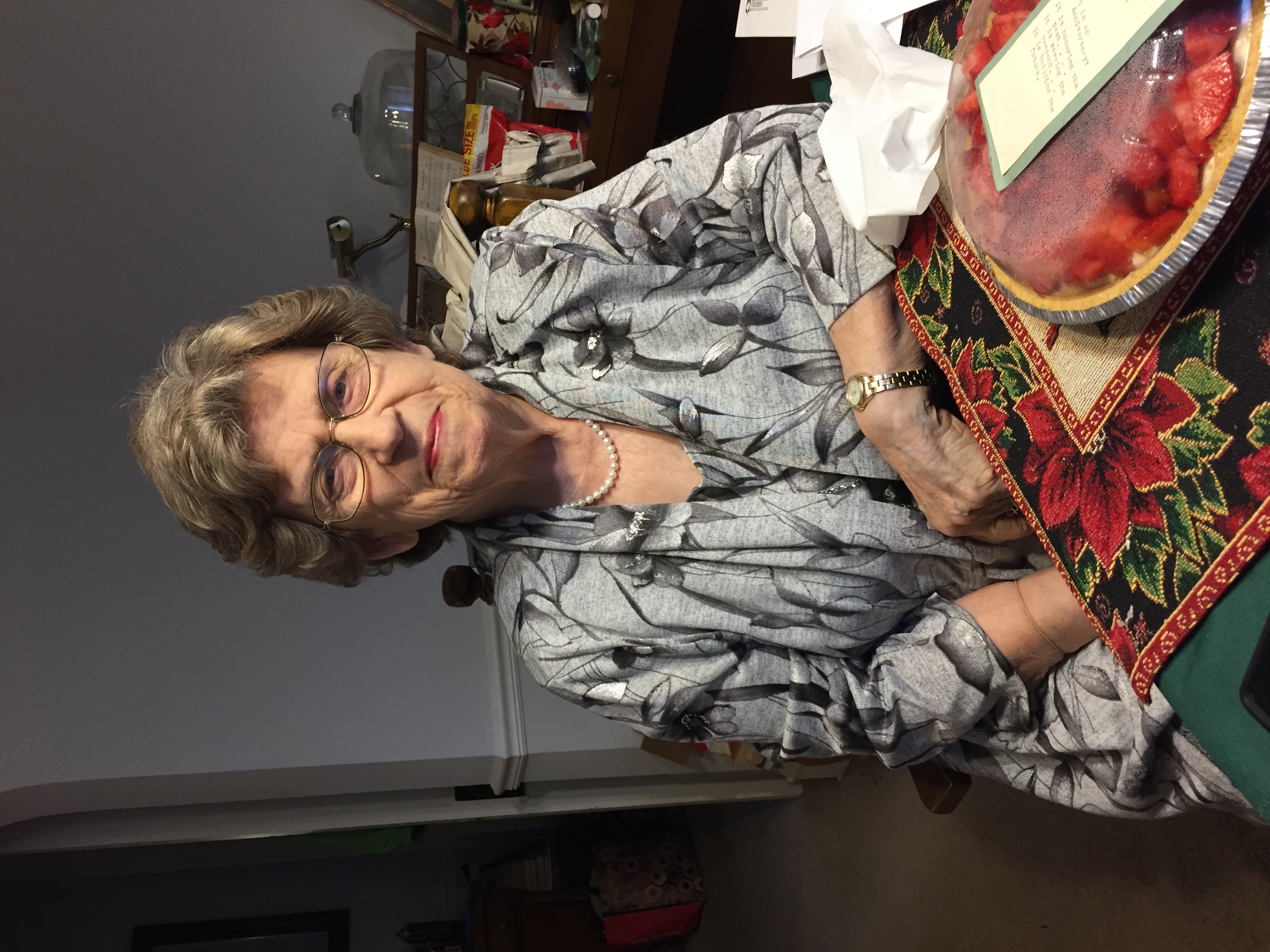
  This weekend — for the first time in my life — I’ll spend Mother’s Day without Mom.

For most of my adult life I lived too far away for a trip home for Mother’s Day to be…practical. Not that I didn’t look for — and find — ways to connect with her during the year. But in my heart, Mother’s Day called for a special level of acknowledgement. That said, there’s an emptiness this year where that phone call should be. No need to time it around church or Sunday lunch — or the other calls she’d get.

Since her passing last December, these past months have been…rough. My siblings and I have, at various times, made trips to go through Mom’s house — she was a “gatherer” of family mementos across generations — much of which might, in other eyes, be characterized as “junk.” And yet, in going through the multitudinous boxes of photos and “stuff,” the elementary school awards (and grade cards), not to mention the cards and letters — so many letters — that we wrote to her over the years before things like Facetime, texts and emails took their place (Mom also printed a bunch of the emails) - it's provided lots of opportunities to remember and reflect. 

She was conscious of how many of her friends had, over the years, taken a bad fall from which they never quite recovered. Ironically, despite her caution, that was ultimately the event that led to her passing. I’ve noted before how — above pretty much everything else — Mom didn’t want to be a burden to her family. Not just on the financial front — though she’d been remarkably prescient in her preparations there. Somehow, miraculously, and even through COVID, a pacemaker and a heart valve, she managed to retain her independence. 

Indeed, generally speaking, women face many more challenges regarding retirement preparation than men. They live longer (and thus are likely to have longer retirements to fund), tend to have less saved for retirement (a result of lower incomes, as well as more workforce interruptions, both when children are young, and as their parents age). In addition to longer retirements, those longer lives mean that they are also more likely to have to fund what can be the catastrophic financial burden of long-term care expenses.  And then, among the unexpected expenses in retirement — as parents all know, are those related to your kids — because, even after they leave home and have kids (and expenses) of their own — they’re still your kids.

Sadly, because we know how much difference it can make in retirement savings, women are less likely to work for an employer that offers a retirement plan at work — to be part-time workers, and thus, less likely to be eligible to participate in those plans even when they do have access.

Oh, and like my mother, they tend to outlive their spouses — often by far more than the relatively modest variance in average life expectancy tables suggest. Mom lived on her own for nearly two decades without my Dad. So many times over the past several months she told me how she never thought she’d spend so many years… alone. 

So, if you’ve still got your mom with you this Mother’s Day, don’t wait. Don’t assume there’s time. Send the card. Make the call. Take the picture. Make the trip. Not just because you’ll want the memory someday — but because she deserves it now. And you’ll treasure it one day.

And if, like me, this year finds you standing in the soft ache of absence — know this: a mother’s love doesn’t leave. It lingers. It lives on in the habits she passed down, the values she taught, and in the many quiet ways she shaped the world around her — and you.

Happy Mother’s Day, Mom. I miss you.

- Nevin E. Adams, JD

Saturday, January 11, 2025

Encouraging Words

 On what turned out to be the longest day of 2024, I said good-bye to my dear 94-year-old mother.

It wasn’t how any of us had planned to spend that day. Two days earlier, she was returning from getting new hearing aids with my sister when she slipped and fell — broke her femur, sending her to the hospital for what was to be a weekend surgery. Mom was amazingly self-sufficient — still living on her own (with some assistance from my sister, who lives nearby) — and she had gone through heart valve replacement and a pacemaker — with COVID in between those two years back.

But this time, as is often the case with older folks, the trauma to her body was more than she could fight off. Thankfully, she managed to hang on until her kids (including this one) and several grandkids were able to get to Chicago to be with her as she went to be with the Lord.    

I moved out — and my parents moved for my Dad’s new job — just as I graduated college.  My parents (and three siblings) lived in a house and a community that I only rarely visited — even less so as my own work and family drew me hundreds of miles away. As a consequence, there was a big chunk of my mother’s life that occurred outside my experience — neighbors, co-workers, and church members. Many of whom had rich and touching stories of the impact Mom had had on their lives.    

Not that Mom and I didn’t talk. After my Dad’s passing in 2006, I committed to calling her every Saturday morning — not always at the same time, and at times (I found later) wresting her out of bed when she, otherwise, probably had been sleeping. We covered a lot of ground on those Saturday mornings — weather, politics, family, investments — and religion. Mom’s faith was the central focus of her life — as the wife of a minister you might expect that — but as have many others of my acquaintance, she had a life — and a profession — outside of the church. 

See, Mom was a teacher from a long line of teachers — what some might think of as the school librarian, though in later years as a “learning center director,” she also became “custodian” and master of the school’s technology investments — video, computers, etc.  It was a skill she relished and nourished — regularly corresponding on email and using her Kindle Fire (and PC) to keep up with photos and YouTube videos. Both her love of books and reading — and technology’s gifts — she passed on to her kids, notably this one. Despite her age, Mom was no luddite, though in recent years the pace of change (the iPhone operating system updates were a particular challenge) was frustrating (and thank goodness for TeamViewer!).

I’ve shared in previous columns the lessons I picked up along the way from Mom (and my Dad, as well). Her decision to set aside money in a 403(b) when my dad insisted they couldn’t afford to (and trust me, it took some sacrifice — that was on top of the 8-10% of pay mandated pension contributions). But she also had the foresight to buy pension credits for the years she stopped teaching to raise a family.

And she, along with my Dad, bought long-term care insurance before it was “cool” (and when it was considerably more affordable) because she didn’t want to be a burden to her family — and had seen first-hand with her parents the financial toll that can take. Mom’s retirement finances — because of the thoughtful and prudent sacrifices my parents made along the way — were comfortable.  Indeed, her retirement income was better than her pre-retirement take-home even after nearly three decades of retirement.

It was, however, her faith that gave purpose to her life. And even when it was no longer safe for her to drive — and COVID kept her home — she believed with all her heart that the Lord’s purpose for her — despite, and perhaps because of those limitations — was to be an encouragement to others.

And so she did — by phone calls, texts, and an astounding amount of “snail mail” — she found ways to reach out, to support and encourage what turned out to be an incredible network of friends, family, church members — even co-workers from three decades ago.  The week she passed those notes were still arriving, encouraging those in her network(s).

I’m already missing my Saturday morning phone calls with Mom. But what a difference we could make in this world if we would all take to heart her “mission” to support and encourage those around us — to provide those “encouraging words” — because you just never know how much difference it could make…

  • Nevin E. Adams, JD

Saturday, May 13, 2023

A New Fiduciary Standard?

Resistance to retirement plan innovations (like automatic enrollment) have long been excused as being “too paternalistic” – but there might be a better standard.

We’ve all heard it – concerns that imposing certain default choices on participants (and sometimes plan sponsors) are, however well-intentioned, intrusive and demeaning. Generally speaking, such concerns aren’t challenged – we “get it,” after all – most of “us” are do-it-for-myself types.

Of course, most participants aren’t – and there’s plenty of anecdotal evidence that workers, and particularly younger workers, WANT that kind of proactive support from their employer.

All of which calls to mind a new standard – one first (to my ears, anyway) articulated in the Nevin & Fred podcast by none other than Fred Reish. See, Fred was talking about explaining to his daughter what a fiduciary was – and she quickly grasped the concept, applying it to her mother and her support for her kids in looking out for them, and their best interests. It’s something I suspect just about every mother (or everyone who has had a mother) can relate – the notion that you’d do anything for your kids. No matter how old they (or you) are. A maternal standard of care, if you will.

How might that manifest itself in plan design? Well, immediate participation and automatic enrollment, for sure – though the latter likely at a rate higher than the 3% threshold that’s been established (first by tradition, then by law) as a minimum. And, depending on that starting rate, contribution acceleration – but one that follows automatically, not dependent on a separate affirmative election. These are not big stretches from where things stand at present of course – but it took the Pension Protection Act of 2006 to bring these structures to the fore – and years longer to lift those initial thresholds – years that higher levels of participation and savings could have been accumulating. 

Now, there were – and in some cases still are – legitimate reasons for plan fiduciaries to hold back on such things. For automatic enrollment, there were concerns that it imposed a financial decision that participants don’t need or can’t afford. There were (and are) administrative costs and burdens attendant with them all – and if there’s anecdotal evidence to suggest participant support, the concerns regarding negative reactions are just as real. And yet, how many have been left on the savings sidelines by those rationalizations?

Of late, I’ve been thinking about another plan design “hesitation” – retirement income. There’s little argument that those solutions are a need – but no real consensus that providing it is, or should be, a plan sponsor’s responsibility. As with the PPA, the SECURE Act provided encouragement; some much-needed (1) legislative structure and guidelines to provide fiduciary comfort with the selection and review of potential provider(s), (2) a safe harbor for the portability of benefits – and even (3) presentation on the participant statement of an amount designed to remind them of what their accumulated balance could produce in retirement income. In fact, those elements were specifically crafted to overcome the traditional objections to considering these options.

To date, the adoption rate – by plan sponsors AND participants – has not been what proponents would hope. Of course, those guidelines and provisions became law just ahead of COVID-19, and there have been a lot of other employment/benefit concerns that arguably, and even rightfully, took precedence. Participants are not, in fact, asking for these features (at least not to their employers), and there remain real fiduciary and operational concerns remaining, even with the guardrails. 

That said, I wonder if it’s not time for plan sponsors to take a more “maternal” approach to plan design – to consider anew – but still prudently and thoughtfully – plan designs like retirement income – to do more than just what the law requires, but what those whose interests they are charged with considering – need. 

I suspect it’s what Mom would do.


- Nevin E. Adams, JD

Saturday, May 07, 2022

Mothers' Day

As kids, we often struggle with our parents’ attempts to help us make good choices—and, at least in my family, Mom caught the brunt of all that (at least from me). 

We were probably like most families at the time in that we never really talked about money or finance. Doubtless that was in no small part because neither of those were in abundance in our household. But mostly, I suspect, it was because that was just one of “those” topics that were deemed to be private.

In our house Mom was definitely our family’s CFO. See, like many in his generation, my dad wanted to hold the checkbook, but it was Mom who always made sure that there was money in the account. She’s the one who started setting aside money from her paycheck in her 403(b) plan at work—and continued to do so, even when my father was convinced they couldn’t afford it—and made no secret of that opinion. Or did until he got a glimpse of the statement that showed Mom’s retirement account growth—and then, inspired by that example, he began setting money aside for retirement as well. They did so relatively late in life—preachers and teachers don’t have a lot of “extra” income, after all (especially not with four kids)—and yet, with careful planning—and diligent saving—they managed. My mother—now nearly 92—is (still) living on her own and financially independent.  

Of course, women tend to live longer (and thus are likely to have longer retirements to fund), tend to have less saved for retirement (a result of lower incomes, as well as more workforce interruptions, both when children are young, and as their parents age), and in addition to longer retirements, those longer lives mean that they are also more likely to have to fund what can be the catastrophic financial burden of long-term care expenses. Among the unexpected expenses in retirement—as parents all know, are those related to your kids—because, even after they leave home and have kids (and expenses) of their own—they’re still your kids.

Sadly, because we know how much difference it can make in retirement savings, women are also less likely to work for an employer that offers a retirement plan at work—and more likely to be part-time workers, and thus less likely to be eligible to participate in those plans even when they do have access. Oh, and like my mother, they tend to outlive their spouses—often by far more than the variance in average life expectancy tables suggest.

And yet, more than a quarter century “in” to her retirement, Mom’s sacrifices over the years (which continue to this day) have allowed her to have one that is, while certainly not luxurious, comfortable. Oh, like many in her generation, she’s constantly worried about being a “burden” to her family, though—because of her preparations—there’s not much chance of that.

Not surprisingly, Mom was the one who encouraged me to start saving in my workplace retirement plan as soon as I was eligible—and while I wasn’t always smart enough to take Mom’s advice in every situation, I’m happy to say that on this I did. 

Yes, mothers give us a lot, not the least of which is life itself. And on this particular Mother’s Day, I’m thankful that I’m going to be able to thank her… in person. 

- Nevin E. Adams, JD